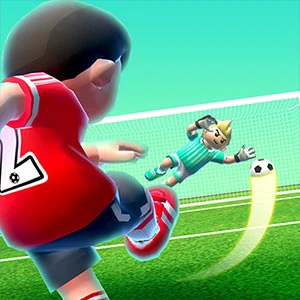
Finish the stroke past the keeper
Fierce Shot turns every attempt into a path you drag out yourself: the ball follows the line you draw, so scoring is a matter of picking a corner and finishing the stroke inside the net. The blocking wall is read, not beaten.
Drawing the route through the defensive line
Score by sending a shot into the goal along a route that clears every defender and the keeper and finishes in an unguarded section of the goal. The attempt counts when the ball crosses the line through that open space.
Use a mouse drag or a one-finger swipe to define the shot path or direction, then release to take the attempt. The drawn line previews where the ball will travel, so check it before letting go.
Locate the widest gap in the defensive line and aim the route at the corner behind it. Leave a small margin around each moving player so the line stays clear from the start of the draw to the release.
Finish behind the last blocker, not in front
The final defender usually guards the near side, which leaves the far corner as the practical target. Shape the route to end behind that player rather than in front of them, because a line that finishes in the far corner is harder to cut off than one aimed down the middle.
Measure width around moving players
Players on the pitch do not hold still, so the gap you measured can close while you draw. Add a small margin around every moving defender and let the route bend wide of their current position, since the extra width is cheap and keeps the line usable through the release.
Draw the line to the back of the net
A route that looks aimed at the net but stops short will send the ball into the last defender. Draw the line all the way into the goal area before releasing, and give the ending a few extra pixels of depth; that extra length turns a near miss into a score.
Commit to one gap instead of loading power
The game rewards the right route more than the strongest kick, so choose the cleanest available gap and commit to it. Forcing extra power through a narrow space usually clips a player and ends the attempt, while a controlled line through one opening scores more reliably.
Let the profile setup finish before you kick
On startup the game announces it is setting up your profile for the Continent and International Cup, and that setup runs before the game accepts any input. Wait for it to finish before your first draw, because until it completes there is no pitch to read.
Reuse one corner to learn your curve
Keep the first two shots aimed at the same exposed corner and watch how much the ball bends after each release. Repeating one target teaches you the curve the game adds on its own, so the third attempt compensates from memory instead of measuring from scratch.
Route versus power when shooting
Is the hardest kick the best way to score?
No. The route decides the attempt, so a clean line that ends in the exposed corner scores more consistently than a strong kick forced through a narrow space, which tends to clip a player and stop the ball short.
How should I handle a goalkeeper who moves?
Watch where the keeper is drifting before you draw, then aim at the corner they are leaving and keep your margin around their current position. Trace the space they are about to clear rather than the spot they occupy.
Why does my shot keep hitting the wall?
The drawn stroke is probably landing inside the wall: the route crosses a defender's space before it reaches the goal. Redraw from the ball toward the side the keeper has left open, keep the stroke straight, and end it deep in the net.
What should my first shot of a session tell me?
It should tell you how much the game bends the ball on its own. Note where the ball curves after you release, then compensate by that amount on the next draw so every later shot becomes an adjustment rather than a fresh guess.