Anchor on the open corner
Cool Score turns every attempt into one drawn line: keep it clear of the defenders and the obstacles, and make it end inside the goal. The drawn gesture is the whole input, so the shape of your curve decides where the kick travels.
A kick that travels the full line you draw
A kick only counts when the ball travels the full route you draw without touching a defender or an obstacle and finishes inside the goal. Each round is best read as a gap problem, so finding the open lane matters more than tracing the fastest arc.
Drag with a mouse or swipe with one finger to trace the shot path, then release to send the ball along it. The line you draw is the input itself, so the shape of your gesture decides where the kick goes, and the route previews on screen before the ball moves.
Look at the goal first and pick the corner no defender is standing near, then sketch a simple route toward that open spot. A wide, uncomplicated arc is easier to trust than a sharp curve on the first attempt, so leave early in the gesture.
Anchor on the open corner before drawing
Defenders usually cover the centre of the goal, so the reliable target is the corner nobody stands near. Find that open section before you draw anything and shape the whole route toward it, because starting from the target makes the path easier to plan and keeps the drawing honest.
Give the final defender extra width
Most blocked kicks fail at the last player instead of the first, because the curve tightens exactly where the defence sits. Leave a generous margin around that final obstacle, keep the arc open there, and widen that section again if the drawn line clips anyone.
Hold the line until it reaches the goal
The kick happens the moment you release, so make sure the complete line already reaches the goal before you lift your finger or cursor. A route that looks finished but stops at the last defender sends the ball short, so read the whole path once more before letting go.
Read the defence for one full beat
Defenders are not always stationary, and a gap that looks closed can open a moment later. Watch their movement for a second before you draw, then trace the route through the space they are about to leave, because patience here costs nothing and clears the way.
Get your first look during loading
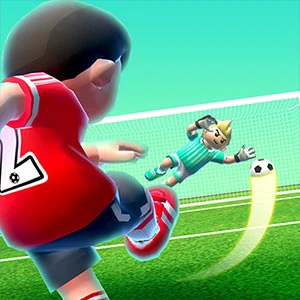
The round loads before anything is clickable, so treat that pause as your scout window. Once the pitch and its starting formation appear, pick the unguarded corner and begin your first route; the loading screen itself shows you the field you will be drawing on.
A clean line beats a heavy strike here
On the shelf beside the swipe-and-power shooters, this one asks for a careful route rather than a strong gesture. There is no force meter to fill, so the whole win sits in the line: keep it clear, keep it complete, and the goal follows.
Why clean-looking shots get blocked
Why does a clean-looking shot still get blocked?
Because the ball runs along the whole drawn line, a single touch anywhere ends the attempt, even if the route looks close. The usual failing point is the tightest section around the final defender, so check the curve there before releasing.
Should I wait for the defence to move before drawing?
Yes. Defenders do not hold still, and a gap that looks shut can open in a moment. Watch their movement for a beat, then aim your line at the area they are leaving instead of the spot they occupy now.
What should I do when the drawn line clips an obstacle?
The line is visible before the ball moves, so widen the curve around the clipped point and release again. Keep the rest of the route unchanged, let the full line reach the goal, and the second attempt usually lands clean.
How much of the route needs to be in the goal?
The ending should sit inside the goal, not stop at the last defender. Give the final section a few extra pixels of depth past the line of defence; that extra length is what turns a near miss into a counting score.