Count the footprint before each roll
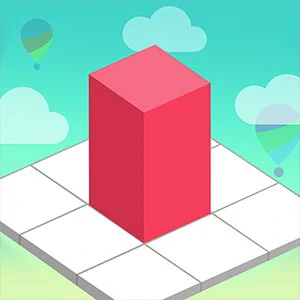
Roll The Block is a moving-puzzle game where one rectangular block tips its way across a tiled board, one face at a time. Every roll changes the block's footprint and its orientation, and the level only clears when the block reaches the destination - often in a specific pose.
A block that tips across the board one face at a time
Move the block from its starting tile to the marked destination without letting any part of it leave the board. Some layouts also ask for a specific final orientation, which narrows the route you can safely take.
Use the arrow keys or the directional input the game shows to roll the block one step at a time. On a touch device, swipe in the direction you want the block to tip, and line up every roll with empty tiles before sending it.
Scan the board for the tiles the block cannot afford to touch, then find the first space wide enough for a turn. Rolling toward open ground early usually keeps an escape route available for the tight sections later.
Count the footprint before every roll you send
Every roll changes whether the block stands on one tile or stretches across two, so check the footprint you will leave before you move. Compare the next position with the open tiles around it and commit only when the whole footprint fits inside the board. One quick count prevents most edge falls.
Change orientation only where the board is wide
Standing the block up or laying it down needs more room than a plain roll, so save orientation changes for the open areas. Plan the turn one or two moves ahead and enter narrow lanes only when the block already aligns with the gap you intend to pass.
Work backward from the pose the goal demands
Some layouts mark the finish but also ask for a particular orientation, so the final approach often matters more than the distance travelled. Decide where the block must sit one move before the end, then look for a route that reaches it. Planning the last few rolls this way turns an open puzzle into a short checklist.
Roll back to open ground when a corner tightens
If the block cannot move without leaving the board, do not keep pushing into the same corner. Roll back to the nearest wide tile, change orientation there if needed, and approach the narrow section again with the block aligned to the gap instead of against it.
Align with the lane before you enter it
Narrow passages only work when the block enters them already lined up with the direction you are travelling. Make the turning roll on the wide tile before the lane, so the block slides through in one line instead of trying to rotate in a space too small for it.
A planning puzzle among the block titles
Compared with the quick-tap titles around it, Roll The Block trades speed for planning: every roll changes the shape that has to fit. On the shelf it suits a visitor who enjoys thinking a few moves ahead rather than reacting, and each board is a fresh geometry problem.
The pose the goal expects
Does the block's final direction change how I play?
Yes. Some layouts ask the destination for a specific orientation, so you plan the last few rolls around that pose instead of just reaching the tile. Decide where the block must sit one move before the end and route toward that spot early.
Is there a penalty for rolling the block off the board?
Rolling any part of the block off the board ends the attempt, so an edge fall is effectively a restart. The way to avoid penalties is counting the footprint before each roll and aligning with lanes before entering them.
I am stuck in a narrow lane. What is the fastest fix?
Roll back to the nearest wide tile instead of forcing the block through the lane in the wrong pose. Change orientation in the open space, align with the gap, and enter the lane again - a short retreat beats a long struggle in a space too small.
Why does the block reach the goal and the level not finish?
Probably because the destination wants a specific final orientation, and the block arrived lying down or sideways. Plan the last three rolls backward from the pose the goal needs, so the block is standing exactly on the target when it arrives.