The car runs, you choose lanes
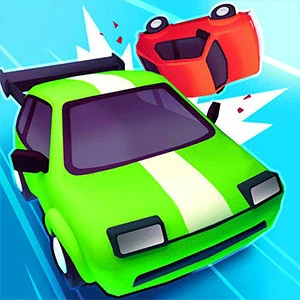
Road Crash is a fifteen-car race decided by lane placement rather than pace: the car keeps moving forward on its own while you steer across the traffic, and the screen tracks your position in the field. Contact with another vehicle is not the end of the run here — the game explicitly rewards it with a burst of speed.
A fifteen-car field raced by lane choice
Climb the order from the back of the field toward the front before the race ends. The screen shows your current position among roughly fifteen cars, so progress is measured in places gained rather than distance covered.
Steer sideways with a drag or the arrow keys, as the on-screen prompt states, while the car handles the forward motion itself. That leaves one decision per moment: which lane to move into, and how early to commit to it.
Settle into a lane and count the cars ahead before making any risky move. The field is dense from the start, so the opening seconds are about finding a line you can hold rather than taking the first gap that appears.
Contact is a speed tool, not a mistake
The track prints its own instruction during the run: crash into cars to get a boost. Touching another vehicle hands you a burst of acceleration rather than ending the attempt, so the question is never whether to risk contact — it is where in the field that contact is worth taking.
Read your position, not your speed
The number that matters is your place in the order, shown as you race. A boost taken in last place moves you up nothing worth having, while the same contact near the front is what turns a good run into a win, so let the position readout decide when the risk is worth it.
Move early, not sharply
Lane changes resolve over a moment, so a steering input begun at the last second arrives too late and lands you in the car you were trying to miss. Begin the move while the gap is still ahead of you and the car settles into the lane before the traffic reaches it.
Keep the lane you have chosen
Weaving constantly costs you the small positional gains you have already made, because each crossing exposes the car to fresh contact from the side. Hold a line until the position readout stops improving, then move once with purpose rather than drifting across the road.
Use the pack, not just the gaps
The cars around you are both obstacle and opportunity: a dense group means frequent contact available, and therefore frequent boosts. A clear stretch of road looks safe and is often slower, since nothing there gives your run any forward push.
Where Road Crash sits on the shelf
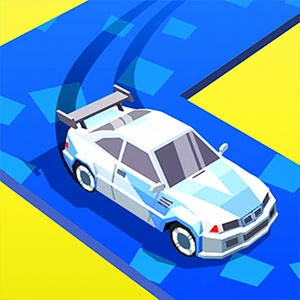
Next to Drift Race 3D, this one trades cornering technique for pure lane reading: one sideways input, automatic forward motion, and a field of rivals to work through. It rewards a player who plans two cars ahead rather than one who reacts.
When a crash becomes a boost
What happens when I hit another car?
You get a boost of speed. The track states it plainly during the run — crash into cars to get a boost — so contact is a mechanic to use rather than a failure state, and the skill is choosing where in the field to take it.
How do I steer?
With a drag or the arrow keys, while the car drives itself forward. Because you never control the throttle, every input is a lane decision, which makes reading the traffic ahead more important than reacting quickly.
What am I actually racing against?
The rest of the field. Your position among roughly fifteen cars is displayed as you race, so the measure of a good run is the number of places you gain rather than how far you travel.
Should I stay in a clear lane?
Only if your position is already good. Empty road gives you no boost, so a clear stretch can be slower than a crowded one; the useful lane is the one where contact is available and your place in the order is still improving.