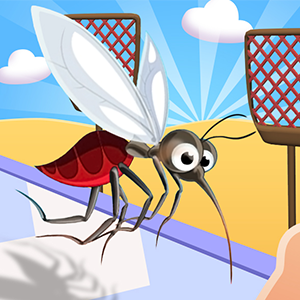
A drag carries a long drift
A lane runner that keeps moving on its own, so most of the run is decided before the next gap arrives. The opening screen asks for one slide gesture, then your job narrows to steering, reading obstacle groups and letting the drift settle.
Read obstacle pairs as one unit before you steer
Reach the end of the route, pick up the items that help, and avoid the obstacles that end the run. Forward travel is automatic, so the finish line is reached by choosing a lane ahead of time rather than reacting at the last moment.
Drag left or right with the mouse, or slide one finger across the screen, to steer sideways. The start screen spells out its own gesture, slide up and down, on the launch prompt. Forward motion stays automatic, which leaves horizontal position as the only thing you manage.
Start with the slide gesture the first screen describes, then make one small sideways input and watch how far the float carries after you release. That single measurement tells you how early a real dodge needs to begin.
Swipe the start prompt, then check the lane widths
The first screen says slide up and down to start, and that is the whole gate into the run. After it clears, spend a glance on the first obstacle group before any steering, because lane choice at the top costs nothing and sets up the first gap.
Steer once, then hold your hand still
The float keeps sliding after each input, so corrections should start earlier than they feel natural. Pick a gap, move into it with one smooth drag and keep still while the route carries you through; repeated small inputs are what turn gaps into misses.
Treat each obstacle pair as a single unit
Reacting to one obstacle at a time leaves no time for the second. Work out the lane that clears both before you move, and notice how the layout repeats, since the same line often works for two or three groups in a row.
Let a closing gap go and wait for the next
When an opening shuts before you reach it, do not fight to recover inside the group. Ease back to a clear lane and wait for the next gap, because forcing the float through a closing space costs the run more than skipping one collection.
Bank a full loop as your pattern lesson
If a section keeps beating you, the fastest lesson is to sit out one full repetition and watch how the obstacles line up and how far the drift carries. Most stretches repeat, and that one quiet loop usually reveals the line you were missing.
Use the level labels as stopping points
The screen carries level labels such as lv:1, lv:2 and lv:3, a Times readout and an Offline note. A level boundary is the clean place to pause a visit, and the Offline marker is worth knowing before you start, since no connection is needed to play.
Questions about the drift and closed gaps
Why does my runner keep gliding after I let go?
The float carries momentum, so the direction you last set persists for a moment after release. Steer earlier, keep each drag short, and give the drift a beat to settle before the next correction, because late steering is what makes gaps look impossible.
How does the run actually start?
The launch screen asks you to slide up and down, and once it registers you are into the run with forward motion already automatic. There is nothing else to press at the gate; the first real decision is which lane to take into the first gap.
Is it better to squeeze through a closing gap?
Usually not. Forcing the float through a gap that is already shutting tends to end the run, while easing back and taking the next opening keeps you alive at the cost of one item. Surviving to the next rhythm beats collecting every pickup.
Can I pick it back up after a break?
The level labels, lv:1, lv:2 and lv:3, and the Offline marker on the opening screen mean the game does not need a live connection to be played. That makes it an easy title to open, run to a level boundary, and set aside until the next visit.